Fishing Rival 3D
- 4.6
- Rating
- 1.00M
- Installs
- Free
- Price
 Analysis by App-foxy
I went into Fishing Rival 3D expecting a quick fishing distraction, but I found a sports game built around short contests, gradual improvement, and the simple satisfaction of making a better catch than the last one. It is free to play, rated for Everyone, and developed by Doodle Mobile Ltd., so it is clearly aimed at a broad audience rather than a specialist simulation crowd. My experience was most enjoyable when I treated each session as a compact challenge instead of expecting a deep fishing career mode.
The important question is not whether this is the most realistic fishing game on mobile. It is not. The better question is whether its 3D presentation and competitive framing give ordinary spare moments enough structure to keep me coming back. In that respect, it has a useful hook. I always had a reason to try another round, but I also noticed that the same streamlined approach can feel limiting if you want detailed equipment management, open exploration, or a calm simulation of real angling.
How the first sessions establish the game
The opening appeal is easy to understand. I am not asked to study a complicated control scheme before getting to the fishing. The game puts the focus on the contest itself, which makes the first few sessions approachable even for someone who rarely plays mobile sports games. That quick start matters because fishing games can lose people if they spend too long explaining menus, gear, or technical systems before delivering a catch.
You May Also Like

 Google Keep - Notes and lists
Google Keep’s Quiet Growth Shows the Appeal of Simpler Notes
As mobile work gets busier, Google Keep keeps winning a simple contest: capture a thought quickly, find it later, and get on with the day.

 Blood Strike: 2.5 Anniversary
Blood Strike’s Loadouts Turn Every Drop Into a Tactical Gamble
A close look at Blood Strike’s custom loadouts: how fast access to signature weapons reshapes its battle royale rhythm, rewards preparation, and narrows the gap between fights.

 Pandora - Music & Podcasts
Pandora’s Music Is Easy to Start, but Harder to Recover
Pandora’s strength is its low-effort path from a seed to a station. Its weak spot is how much confidence it asks you to place in connection, setup, and quiet recovery.

 8 Ball Pool
 Is Built on Rivalries, Rematches, and Routine
A close look at the rivalries, rematches, shared routines, and unanswered safety questions that turn a quick pool match into a persistent mobile community.

 Samsung Music
’s Quiet Strength Is Playing What You Already Own
Its reach comes less from spectacle than from dependable access to a personal library. That simplicity is both the app’s strongest retention engine and its ceiling.

 AccuWeather: Weather Radar
AccuWeather Review: A Quick, Clear Forecast for Everyday Decisions
For everyday plans, the best forecast is the one you can understand quickly. AccuWeather makes rain timing, radar, and local conditions easy to act on, with a few trade-offs.
More From Our News Desk



My early goal was therefore very clear: learn how each fishing encounter behaves, react at the right moment, and improve the result. That clarity is one of the strongest design choices here. Instead of giving me a large list of unrelated tasks, the game makes the central activity easy to recognize. Every attempt becomes a small test of timing and attention, and the competitive framing gives ordinary catches more meaning than they would have in a purely relaxing fishing app.
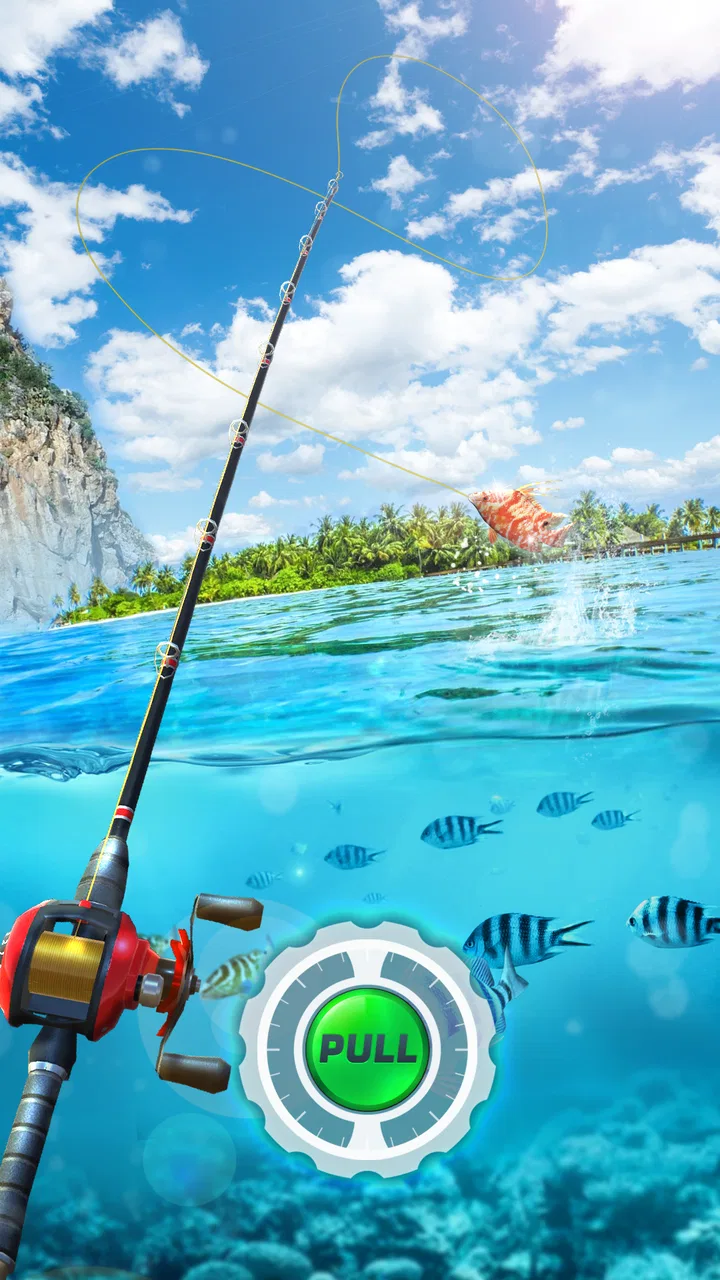
This is also where the 3D presentation helps. The visuals make the action easier to follow than a flat menu-driven fishing game, while the sports category positioning gives the experience a more active rhythm. I felt encouraged to pay attention rather than simply tap through an idle sequence. It is still light entertainment, but it does not present itself as a passive screensaver.
One practical tip helped me enjoy the beginning more: I stopped trying to rush through every encounter. Watching how the action responds before making a move gave me a better sense of the rhythm. That approach is especially useful for younger players or anyone unfamiliar with fishing games, because the game becomes less about guessing and more about recognizing patterns in the moment.
What makes the early goals work
The early goals work because they are immediate and understandable. I did not need a spreadsheet or a long-term plan to know what I was trying to accomplish. A successful round felt like a direct improvement, while a poor one gave me a reason to adjust my approach. That feedback loop is more valuable than a large collection of decorative rewards because it connects progress to something I actually did.
There is a trade-off, though. Players who want a rich sense of place may find the early experience too focused on the contest. The game’s identity is closer to a quick competitive fishing challenge than to a digital holiday at a lake. If your ideal fishing game includes quiet exploration, weather watching, detailed bait choices, or a broad map to wander through, this will probably feel too narrow from the start.
I also think the game suits shared household use better than many realistic fishing simulations. A child can understand the basic objective, while an adult can enjoy trying to improve a result during a short break. The Everyone content rating supports that broad accessibility, although younger players may still need guidance around optional purchases rather than the fishing itself.
How progress becomes visible
Good mobile progression needs to show me that my time is producing something. Here, the clearest progress signal comes from the contrast between attempts. I can judge whether I am becoming more consistent, whether I am handling pressure better, and whether I am making fewer impulsive mistakes. That kind of personal improvement is easy to overlook, but it is what keeps a simple contest from feeling completely repetitive.
The game also benefits from the sense that each successful encounter moves me forward. I will avoid pretending that it offers the same depth as a full console fishing career, because it does not create that impression in my hands. Instead, its progress is compact and session-friendly. I can play for a few minutes, feel that I have completed something, and put the phone down without needing to remember a complicated story or a large set of objectives.
That makes it a good match for a realistic everyday scenario: I might have ten minutes before a train, during a lunch break, or while waiting for someone. I can start a session without preparing a loadout or remembering a long quest chain. If I win, I get a small sense of accomplishment. If I lose, the next attempt is close enough to feel approachable rather than like a major setback.
A less obvious strength is that this structure makes self-imposed goals possible. I found more satisfaction when I decided to focus on consistency instead of only chasing a single impressive result. For example, I could treat several rounds as practice and pay attention to whether my decisions became calmer. That is useful because the game’s formal structure is intentionally light; players who want more longevity may need to create their own short-term targets.
Where the difficulty curve feels fair
The challenge is most enjoyable when it asks for better reactions without making the first mistake feel disastrous. The accessible controls give newcomers room to learn, while the competitive setup adds a reason to stay alert. I liked that the game did not require me to be an expert in fishing terminology before I could participate. The challenge comes from the encounter, not from decoding a manual.
Still, this type of design has a familiar weakness: once I understand the basic rhythm, the quality of later sessions depends heavily on how much variety the game continues to provide. A simple action loop can be satisfying, but it needs changing goals or stronger opposition to avoid becoming routine. I found the best motivation in trying to refine my own play, not in expecting the game to transform into a detailed simulation.
That distinction matters when deciding whether to install it. If you enjoy short competitive games where improvement comes from timing and repetition, the difficulty curve should feel inviting. If you prefer a game that constantly introduces new rules, strategic layers, or exploration choices, the streamlined format may not hold your attention for long. I would recommend it more confidently to casual sports players than to dedicated fishing enthusiasts seeking realism.
Another useful approach is to play with patience when a round begins to feel frustrating. Repeating the same rushed action rarely helped me. Taking a moment to observe the situation and treating a failed attempt as information made the challenge feel more manageable. That is a small but meaningful lesson for a game designed around quick sessions: speed is convenient, but hurrying is not always efficient.
Unlocks, motivation, and the pressure to continue
The game’s retention appeal comes from the desire to see what the next successful stretch will bring and to prove that I can perform better. That is a sensible foundation for a sports game. It gives each contest a little tension without requiring a dramatic narrative. I was not playing because I needed to discover a complex plot; I was playing because the next result might be better than the previous one.
At the same time, free-to-play design naturally changes how I evaluate pacing. Fishing Rival 3D can be downloaded without an upfront charge, but optional in-app purchases range from $0.99 to $99.99 per item. That wide range is worth keeping in mind before handing the phone to a child or allowing casual purchases. I recommend checking purchase controls in the device settings if the game will be used by a younger player.
For me, the best way to avoid purchase pressure was to decide in advance whether I was playing for free as a short pastime or whether I wanted to spend money to move faster. That distinction prevents the progression from becoming an accidental expense. A free game can be perfectly enjoyable when I accept its intended pace; frustration usually appears when I compare that pace with the fastest possible route through optional spending.
This is also where the game may lose some players. Anyone who dislikes energy limits, repeated attempts, or the general feeling that progress is being encouraged through purchases may prefer a paid fishing game with a more predictable structure. I would not choose this as my first recommendation for someone who wants to pay once and remove all concerns about monetization. Its free entry is convenient, but it comes with the usual need for restraint.
What the current package means for players
The Android release works on devices running version 5.0 or later, and the current version is 1.10.3.2. That broad operating-system reach makes it accessible to people using older compatible phones, although the actual comfort of play will still depend on the device’s screen, performance, and battery condition. I would give the game a few minutes on the intended phone before deciding whether the visual action feels comfortable.
Its audience size also suggests that this is not an obscure experiment. It has passed one million installs, with an average rating of 4.6 from around eleven thousand ratings and roughly 1.4 thousand written reviews. I do not treat popularity as proof that every player will enjoy it, but those figures do reinforce my impression that the game’s straightforward format is easy for many mobile players to understand.
The high rating should be read alongside the game’s specific identity. People who want quick fishing contests may find exactly what they need, while players expecting a full simulation may judge it by a completely different standard. I think the fairest evaluation is to ask whether the compact competitive loop works for you. Judged on that basis, it is more coherent than a generic sports title trying to cover too many activities.
Who should play it, and who should skip it
I would recommend it to someone who wants a casual sports game with a fishing theme, clear early goals, and sessions that can fit around a busy day. It is especially suitable for players who enjoy repeating a contest to improve timing rather than managing a large collection of statistics. Families may also appreciate the accessible premise, provided an adult keeps an eye on optional purchases.
I would be more cautious about recommending it to serious anglers. The game captures the idea of a fishing competition, but it is not a replacement for learning real techniques, identifying species, or planning an actual trip. It also may not satisfy players who want a peaceful, slow-paced experience. The word “fishing” can suggest relaxation, while this game’s stronger appeal comes from action, competition, and the push to perform better.
Players who prefer offline-friendly, one-time-purchase experiences should compare it with premium alternatives before committing. A paid title may offer fewer monetization concerns and a more deliberate progression model, even if it lacks this game’s easy entry. On the other hand, players who want to try a fishing game without paying first have little to lose by testing this one, as long as they are comfortable with optional purchases and a focused gameplay loop.
My verdict on the progression and pacing
After spending time with it, I see Fishing Rival 3D as a compact sports game that understands the value of immediate goals. It gets me into the action quickly, gives each attempt a clear purpose, and relies on personal improvement to make repetition meaningful. The progression is not deep enough to satisfy players looking for a complete fishing career, but it is appropriately light for quick mobile sessions.
The strongest part is the balance between accessibility and attention. I can pick it up without preparation, yet careless play still feels less effective than patient observation. That combination gives the game more substance than its simple premise might suggest. My main reservation is that the long-term pull depends on how much I enjoy repeating the central contest and how comfortable I am with free-to-play pacing.
With a 4.6 average and more than a million installs, it has clearly found an audience, and I understand why. I would install it when I wanted a free, approachable fishing-themed challenge rather than a realistic simulator. I would skip it when I wanted open exploration, detailed angling systems, or a purchase-once experience. Its progression works best when you value quick goals and gradual skill improvement over depth.
Overall, I think Doodle Mobile Ltd. has made a sensible choice by keeping the focus narrow. The game does not need to imitate every kind of fishing experience to be enjoyable. Give it a few relaxed sessions, set your own limits around optional spending, and judge it by the quality of its short contests. For the right player, that is enough to make a free mobile sports game worth returning to.
FAQs for Fishing Rival 3D
01What is Fishing Rival 3D, and how does the gameplay work?
Fishing Rival 3D is a competitive fishing game focused on short, action-packed matches. You cast your line, aim for valuable fish, manage tension while reeling, and compete against another angler for the highest score. The controls are designed for mobile screens, so beginners can understand the basics quickly, while timing, fish selection, and equipment upgrades add more depth over time.
02Can I play Fishing Rival 3D without an internet connection?
Fishing Rival 3D may require an internet connection for important features such as online competitions, player rankings, event participation, advertisements, and synchronization of progress. Some portions of the game might load or remain playable offline, but the complete experience is generally better when connected. Before downloading, users should also expect that connection requirements can vary after updates or between different game modes.
03Is Fishing Rival 3D free to download and play?
Fishing Rival 3D is generally available as a free download, allowing players to begin fishing without paying an upfront purchase price. However, free-to-play games commonly include optional in-app purchases for currency, equipment, upgrades, or faster progression. Advertisements may also appear during play. Spending is not necessarily required, but players should review purchase settings, especially if children use the device.
04Does Fishing Rival 3D offer multiplayer or competitive modes?
Competition is one of the main attractions of Fishing Rival 3D. The game is built around challenging other anglers, comparing catches, and trying to earn better results through accurate casting and effective reeling. Depending on the current version, matchmaking, tournaments, leaderboards, or event-based contests may be available. Online features can depend on servers, account synchronization, and a stable connection.
05What devices and skills are needed to enjoy Fishing Rival 3D?
Fishing Rival 3D is designed for modern Android and iOS smartphones and tablets, although exact compatibility depends on the operating system version and device hardware. A newer device usually provides smoother animations and faster loading. The game is easy to start because its controls are simple, but success requires practice with aiming, timing, line tension, and choosing suitable upgrades for tougher catches.
Pros
- Realistic 3D environments make each fishing location feel immersive.
- Quick matches are convenient for short gaming sessions.
- Different fish species require varied timing and casting strategies.
- Equipment upgrades provide a clear sense of progression.
- Simple touch controls are easy for new players to understand.
Cons
- Energy or entry limits may restrict how often you can play.
- Progress can feel slow without upgrading rods and other equipment.
- Competitive events may favor players who spend money on upgrades.
- Some matches rely heavily on timing and can feel repetitive.
- The game may require a stable internet connection for key features.

Fishing Rival 3D
Gallery